Your old skincare routine may not be wrong. Your skin changed. If your skin feels dry, reactive, or suddenly fussy about products it used to tolerate, the answer is probably not a ten-step shopping cart.
This drugstore skincare routine for sensitive skin is built for women over 50 who need gentle cleansing, fragrance-free moisture, barrier support, and daily sun protection without the hype. The point is not to buy everything. It is to make your skin feel comfortable again. If menopause has changed what your skin can tolerate, my guide to starting over with your skincare routine after menopause explains more about why that can happen.
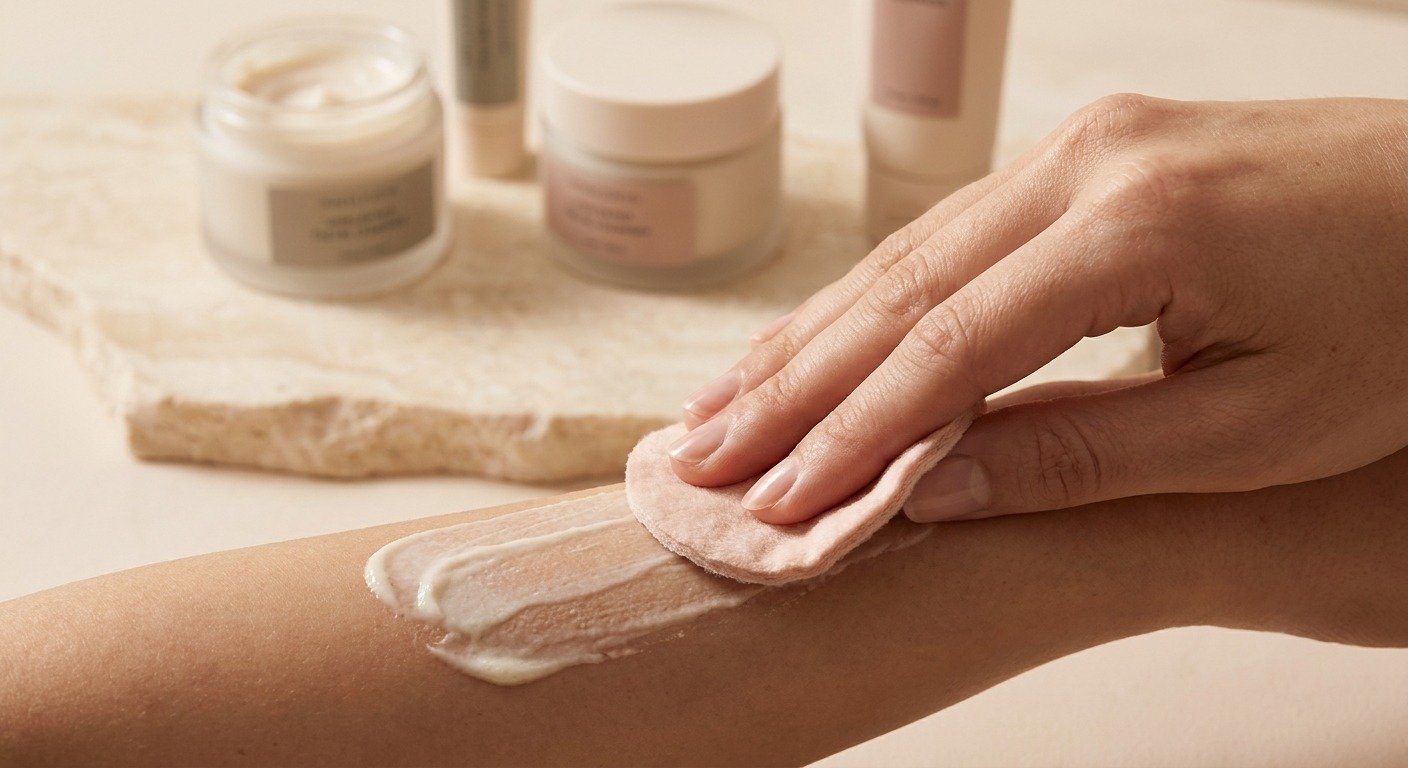
Why Sensitive Skin Can Feel Different After 50
Around menopause, skin can become drier, thinner, and more easily irritated. That does not mean you need a completely different personality or a luxury shelf at Sephora. It means your routine may need fewer irritants, more consistency, and a little more support. The American Academy of Dermatology notes that menopause can reduce the skin’s ability to hold water and recommends mild cleansing and moisturizing ingredients such as glycerin or hyaluronic acid for dry skin. Read its guidance on skin during menopause.
Before adding another serum to your cart because TikTok told you to, start with your skin barrier. A healthy barrier helps keep moisture in and potential irritants out. When that barrier is disrupted, skin may feel tight, dry, itchy, or sting when you apply products that never bothered you before.
When shopping at the drugstore, I would prioritize fragrance-free formulas and look for barrier-supporting and hydrating ingredients such as ceramides, glycerin, hyaluronic acid, and colloidal oatmeal. If hyaluronic acid is one of those ingredients you see everywhere but are not quite sure what it actually does, I break down how hyaluronic acid works and what the hype gets right. Niacinamide can also be helpful for some people, but sensitive skin is highly individual. An ingredient being considered “gentle” does not guarantee that your skin will love it.
I would be more cautious with fragrance, essential oils, strong exfoliating acids, scrubs, and products with long lists of active ingredients, especially if your skin is already irritated. Sensitive skin does not need to earn an advanced degree in skincare. Give it fewer variables to manage.
3-Step Drugstore Skincare Routine for Sensitive Skin: Morning
Step 1: Cleanse, Or Don’t
If your skin is dry and comfortable when you wake up, you may not need a cleanser at all. A rinse with lukewarm water can be enough. If you prefer cleansing, look for a creamy or lotion-style fragrance-free cleanser that leaves your skin comfortable rather than squeaky clean. That squeak is not a skincare achievement.
Step 2: Moisturize
Choose a fragrance-free moisturizer formulated for sensitive or dry skin. Instead of shopping by brand, turn the bottle around and look for humectants such as glycerin or hyaluronic acid plus barrier-supporting ingredients such as ceramides. If your skin is especially dry, a cream may feel better than a lightweight lotion.
Step 3: Sunscreen
Daily broad-spectrum SPF 30 or higher is the non-negotiable step. The goal is not perfection. It is consistent protection in a formula your skin will tolerate and you will actually use. If other sunscreens sting, a mineral sunscreen with zinc oxide and/or titanium dioxide may be worth trying, but you do not automatically have to avoid chemical filters. The American Academy of Dermatology recommends a broad-spectrum, water-resistant sunscreen with SPF 30 or higher and notes that zinc oxide and titanium dioxide are often better tolerated by sensitive skin. See its sunscreen-label guide here.
What to Look for at the Drugstore
For cleanser: Look for a fragrance-free cream, lotion, or low-foam cleanser that leaves your skin comfortable. Be careful with harsh scrubs, strong fragrance, and that tight, squeaky-clean feeling.
For moisturizer: Look for glycerin, hyaluronic acid, ceramides, or colloidal oatmeal in a simple fragrance-free formula. You do not need the most complicated ingredient list just because it says “active.”
For sunscreen: Look for broad-spectrum SPF 30 or higher in a formula you will use consistently. A mineral sunscreen can be worth trying if your skin is reactive, but “mineral” is not an automatic answer if the formula still feels uncomfortable on your skin.
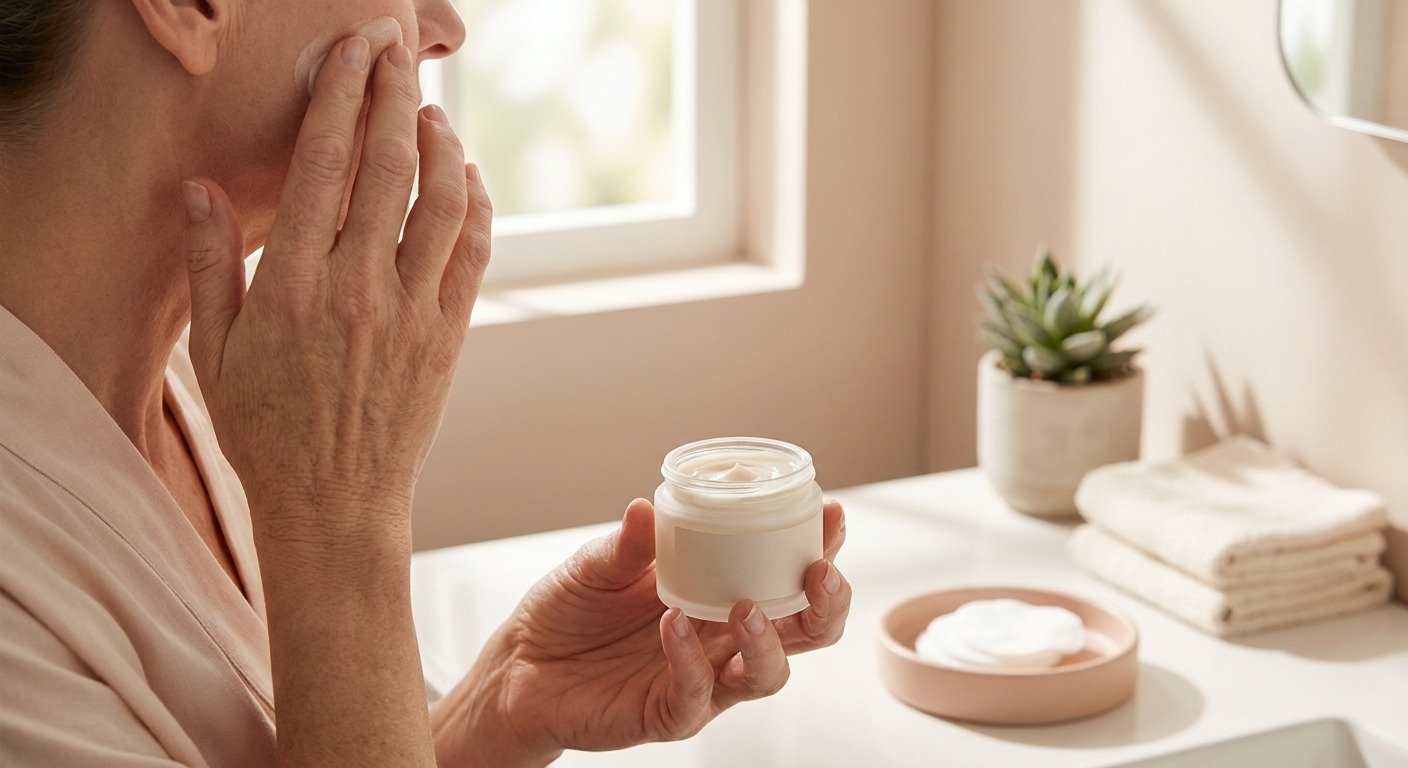
A Simple Evening Routine for Sensitive, Mature Skin
Step 1: Remove Makeup and Sunscreen
If you wear makeup or water-resistant sunscreen, start with a gentle fragrance-free micellar water, cleansing balm, or cleansing oil. The goal is to dissolve makeup, not scrub it into submission. Be especially gentle around the eyes.
Step 2: Gentle Cleanser
Follow with the same mild cleanser you use in the morning. You do not need a separate collection of cleansers taking over the bathroom counter. Use your fingertips, lukewarm water, and minimal friction.
Step 3: Moisturize and Support the Barrier
Finish with your moisturizer. At night, you may prefer a richer cream, particularly if your skin has become drier with age. Again, look for simple formulas with humectants and barrier-supporting ingredients rather than assuming a higher price tag means better skincare. If your skin needs more help holding onto moisture, you can also read my guide to slugging and whether it makes sense for your skin, but I would get this basic routine comfortable first.
What About Retinol, Vitamin C, and Exfoliating Acids?
They are not automatically off-limits, but they also are not where I would start if your skin is currently reactive. Get the basic cleanse, moisturize, and protect routine working first. Once your skin feels consistently comfortable, you can introduce one active at a time if it supports your skincare goals.
This is also where patience matters. Adding three new actives on Sunday night and trying to identify the culprit when your face is angry on Tuesday is skincare detective work nobody needs.
Patch Test New Products
Even products marketed for sensitive skin can cause reactions, so test new products one at a time. The American Academy of Dermatology recommends applying a product to a small test area twice daily for seven to ten days before using it more broadly. That gives your skin a fair chance to weigh in before you commit. Follow the full patch-test instructions here.
If you have persistent burning, itching, swelling, significant redness, or irritation that does not improve, see a board-certified dermatologist. “Sensitive skin” can overlap with a condition that deserves actual medical care, not more experimenting in the drugstore aisle.
Frequently Asked Questions
What is the best basic skincare routine for sensitive skin?
For most people, a simple routine is the best place to start: a gentle cleanser, a fragrance-free moisturizer, and broad-spectrum SPF 30 or higher. Once your skin is consistently comfortable, you can decide whether you actually need anything else.
Should sensitive skin avoid retinol completely?
Not necessarily. Retinoids can be irritating, but some people with sensitive skin tolerate them well when introduced slowly and used in a supportive routine. If your skin is already irritated, get the basics stable first before adding a retinoid.
Is expensive skincare better for sensitive skin?
No. Price does not determine whether a formula is gentle, effective, or appropriate for your skin. A well-formulated drugstore cleanser or moisturizer can support sensitive skin beautifully. Focus on the formulation, ingredient list, and how your skin responds.
What ingredients are helpful for sensitive, mature skin?
Start with simple, fragrance-free formulas that include humectants such as glycerin or hyaluronic acid and barrier-supporting ingredients such as ceramides. Colloidal oatmeal can also be a nice option for some people. The best formula is the one your skin tolerates consistently, not the one with the longest ingredient list.
How long should I patch test a new skincare product?
Apply the product to a small area twice a day for seven to ten days before using it on your face. If your skin reacts with redness, itching, swelling, or a rash, wash it off and stop using it. The American Academy of Dermatology’s patch-test guidance has the full method.
The Bottom Line
A drugstore skincare routine for sensitive skin does not need to be expensive, complicated, or built around the newest thing on TikTok. Start with a gentle cleanser, a fragrance-free moisturizer, and broad-spectrum SPF 30 or higher. Give your skin time to settle before adding anything else.
For pro-aging skin, the goal is not to fight every sign of getting older. It is to keep your skin healthy, comfortable, and supported as its needs change. You do not need to buy your way back to your old routine. You need a routine that works for the skin you have now.