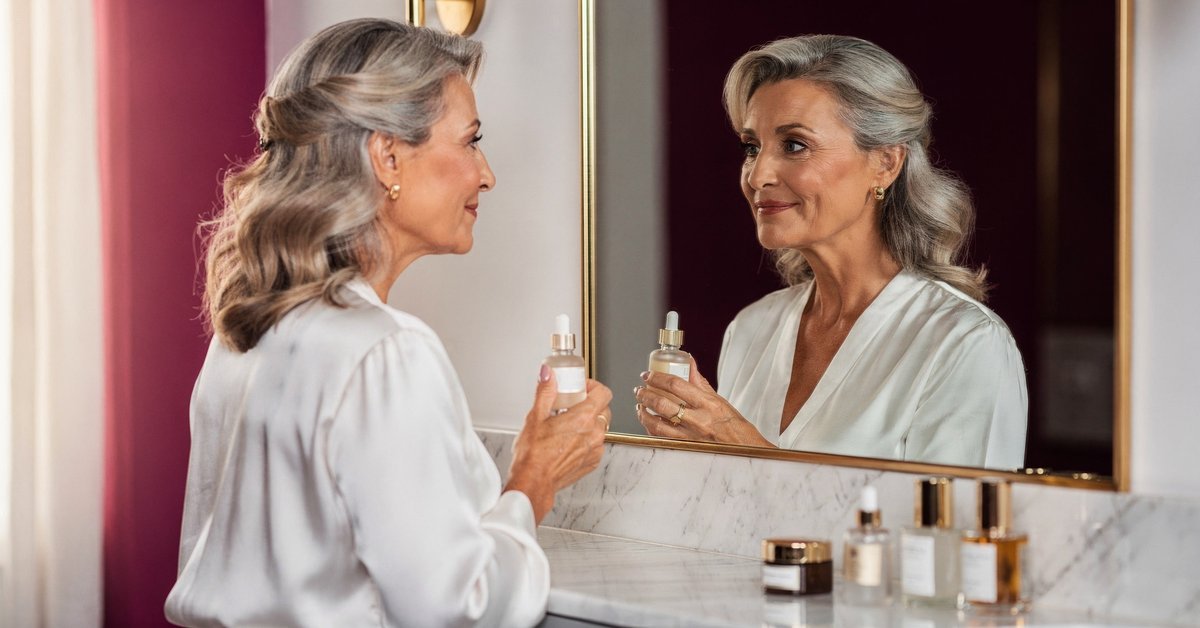
It’s a Tuesday morning, and you’re looking in the mirror, coffee in hand. You’ve been using the same serum for years, the one that used to make your skin feel like velvet. Now? It just… sits there. Or worse, it’s actively making things feel drier, duller, or just plain off. You’re 53, maybe a little more, maybe a little less, and you’re pretty sure your skin just broke up with its entire routine, leaving you wondering where to even begin.
Sound familiar? If you’ve hit your 50s, especially post-menopause, you’re not alone. This isn’t just an aging thing; it’s a hormonal shift that fundamentally changes how our skin behaves. For years, I’ve had women, smart, accomplished women, tell me their tried-and-true products suddenly stopped working. It’s like our skin decided to reset the rules, and we weren’t given the new playbook. I’ve been there myself, staring at a cabinet full of expensive products that felt like they belonged to a different person.
Understanding the New Rules: What Menopause Does to Your Skin
Let’s get real about what’s happening. Menopause isn’t just about hot flashes and mood swings; it’s a systemic change, and our skin is often the first place we see it. The primary culprit? Estrogen. As our estrogen levels decline, a cascade of changes occurs:
* Collagen and Elastin Loss: Estrogen helps maintain collagen. Without it, we lose about 30% of our skin’s collagen in the first five years post-menopause, and it continues to decline. This leads to increased fine lines, wrinkles, and a loss of firmness.
* Drier Skin: Estrogen also plays a role in hyaluronic acid production and the skin’s natural barrier function. Less estrogen means less natural hydration and a compromised barrier, leading to dryness, sensitivity, and a rougher texture.
* Slower Cell Turnover: The rate at which our skin cells regenerate slows down significantly. This means dead skin cells hang around longer, contributing to dullness and a less radiant complexion.
* Increased Sensitivity and Inflammation: The weakened skin barrier can make skin more reactive to products it once tolerated, leading to redness, irritation, and even new sensitivities.
* Changes in Oil Production: For some, oil production decreases, exacerbating dryness. For others, hormonal fluctuations can trigger unexpected breakouts, even in our 50s. It’s a bit of a crapshoot, isn’t it?
So, when your old routine feels like it’s doing nothing, it’s not the products’ fault entirely, and it’s certainly not your fault. Your skin has genuinely changed, and what it needs now is different. It’s not about fighting aging; it’s about adapting to a new biological reality with grace and intelligence.
Rebuilding Your Skincare Foundation: Less is Often More (But Smarter)
Starting from scratch can feel daunting, but think of it as an opportunity to curate a powerful, effective routine tailored to your current skin. My approach, both personally and professionally, has always been about intentionality. We don’t need a 12-step routine; we need the right steps.
Here’s where I suggest we focus:
1. Gentle Cleansing is Non-Negotiable: Ditch anything that leaves your skin feeling tight or stripped. Creamy, hydrating cleansers are your new best friend. Think of it as protecting your skin’s delicate barrier from the get-go. I’ve found that a good balm or oil cleanser followed by a gentle cream cleanser works wonders, especially if you wear makeup.
2. Hydration, Hydration, Hydration: This isn’t just about drinking water (though that helps). Look for ingredients that actively draw moisture into the skin and seal it in. Hyaluronic acid, glycerin, ceramides, and squalane are excellent. Layering a hydrating serum under a rich moisturizer can make a huge difference. Don’t be afraid of richer textures; your skin needs that extra cushion now.
3. Smart Exfoliation: Slower cell turnover means we need a little help. But aggressive physical scrubs are out. Chemical exfoliants like AHAs (lactic acid is particularly gentle and hydrating) or PHAs can gently slough off dead skin cells, revealing brighter skin without irritation. Start slowly, once or twice a week, and listen to your skin.
4. Targeted Treatments: The Power Players:
* Retinoids (Retinol/Retinaldehyde): Still the gold standard for collagen production and cell turnover. If you haven’t used them before, start with a low concentration and gradually increase. If you’re already using one, consider if your skin can tolerate a slightly stronger one, or if you need to dial back due to increased sensitivity. Consistency is key here, not strength.
* Antioxidants (Vitamin C, Niacinamide): These protect your skin from environmental damage, brighten, and can help with collagen synthesis. Vitamin C is a powerhouse for radiance and firmness. Niacinamide is fantastic for barrier support, redness, and overall skin health.
* Peptides: These are like little messengers that tell your skin to do things, like produce more collagen. They’re a great addition for firmness and elasticity, often found in serums and moisturizers.
If you want to see these ingredients in action without the department store price tag, I put together a full drugstore skincare video specifically for women navigating this exact transition. Real products, real prices, real results.
Watch it here: Skincare After 50
5. Sun Protection, Every Single Day: This hasn’t changed, but its importance is amplified. Sun damage accelerates collagen breakdown and can worsen hyperpigmentation. A broad-spectrum SPF 30 or higher is non-negotiable, rain or shine. Mineral sunscreens (zinc oxide, titanium dioxide) can be a good option if you’re experiencing increased sensitivity.
Embracing the Evolution: Your Skin, Your Story
This isn’t about chasing youth; it’s about honoring the skin you’re in and giving it what it needs to be healthy, radiant, and comfortable. It’s about feeling good when you look in the mirror, not just about looking a certain way. Your skin at 53 tells a story, and it’s a beautiful one.
As a certified makeup artist who specializes in mature skin, I’ve learned that adaptability and informed decision-making are everything, whether you’re rebuilding a skincare routine or rebuilding yourself.
Your skin at 53 is not broken. It is different, and different requires a different approach. The good news is that once you understand what it actually needs, everything gets simpler.
If you want more of this, research-backed, mature skin focused, and written for women who are done being talked down to, subscribe below. Every week I go deeper on pro-aging beauty, beauty tech, and what the industry is not telling you.