5 Menopause Makeup Mistakes You Might Be Making (And the Simple Moves That Fix Them)
These menopause makeup mistakes are sneaky. If your foundation has started looking heavier than it used to, or your concealer is doing something weird by noon, you haven't lost your touch. Your skin has just changed, and the techniques and products that worked at 35 or 40 aren't always going to hold up now.
Menopause shifts a lot of things in our skin: collagen loss, a drop in oil production, thinner skin texture, and changes in how light interacts with our face. It's a real shift, and it calls for a real adjustment in how we approach our routines.
These aren’t random tips pulled together for a listicle. They’re the specific adjustments I’ve seen make the biggest difference for women navigating menopausal skin, in my work as a certified makeup artist and in my own mirror. If something in your routine has stopped working and you can’t figure out why, chances are one of these is the culprit.
This isn't a rush job. Think of this as your me-time routine, a therapeutic hour for yourself where the process is just as valuable as the result.
Mistake #1: Skipping Serious Skin Prep
The Move: Prep Like You Actually Mean It
The single most impactful thing you can do for your makeup right now has nothing to do with your foundation. It's what you do before foundation ever touches your face.
During menopause, estrogen levels drop, and with that comes a reduction in the skin's ability to retain moisture. Hyaluronic acid production slows down. The skin barrier becomes more sensitive. If you're layering product onto a dry, compromised surface, nothing is going to perform the way you want it to.
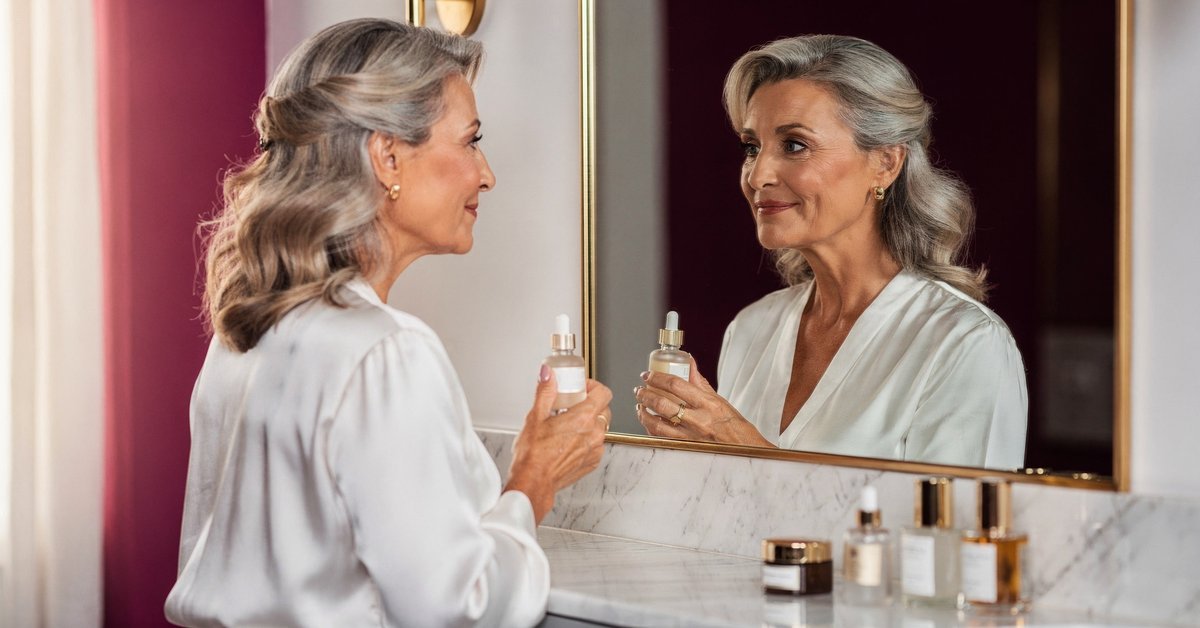
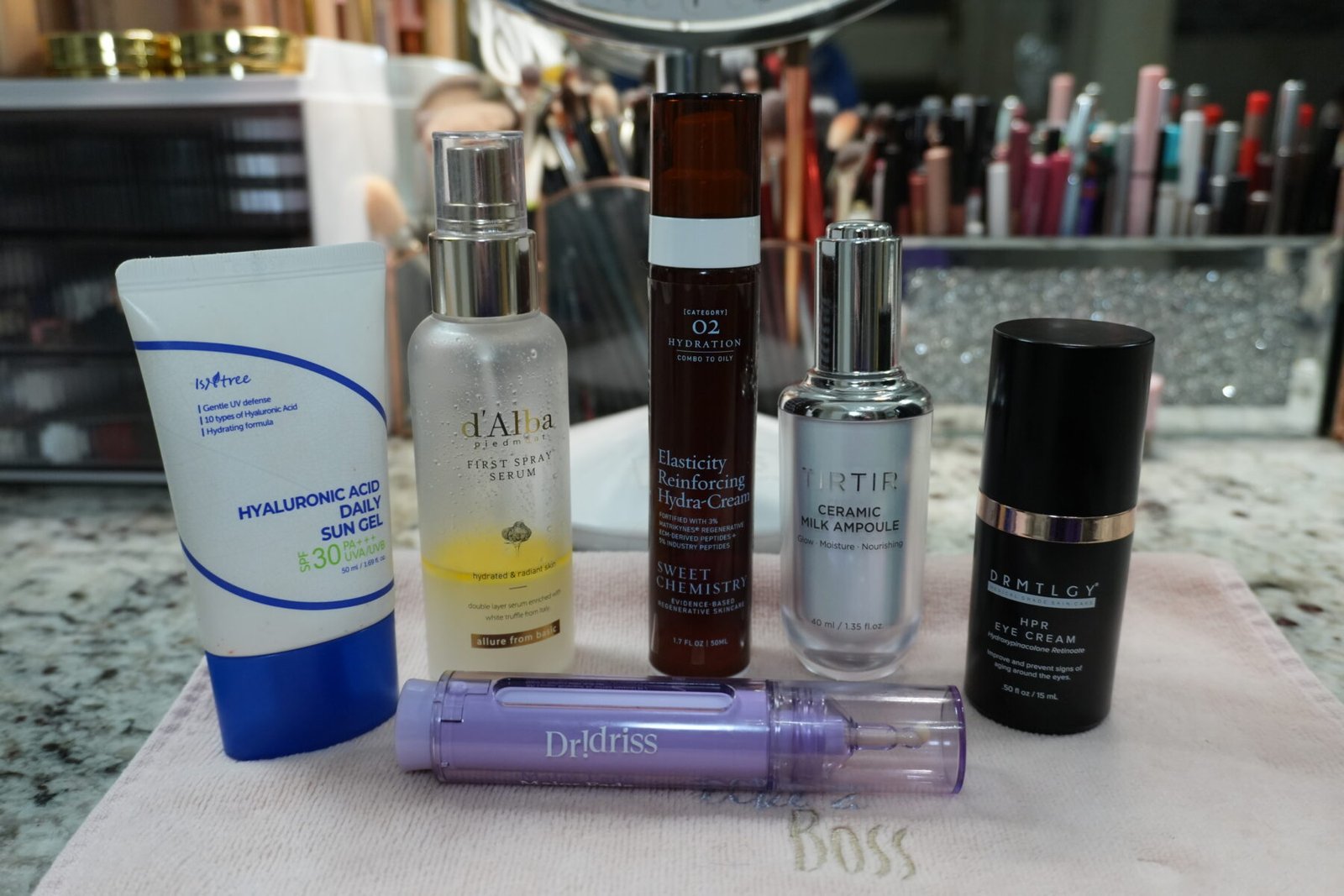
The move is to treat your prep routine as non-negotiable. A hydrating serum, a rich but fast-absorbing moisturizer (look for ceramides and hyaluronic acid), and a hydrating SPF, either mineral or chemical, whatever works for your skin. Apply each product with a gentle touch and give each one real time to absorb before you layer the next. Rushing this step is where a lot of us lose the battle before we even start.
This is one of the most overlooked menopause makeup mistakes women make — skipping the prep.
Mistake #2: Staying Loyal to Full-Coverage, Matte Foundation
The Move: Switch to Light, Hydrating Coverage
I understand the instinct. We think more coverage means a better result. But on menopausal skin, heavy and matte often means the opposite. Matte formulas cling to dry patches. Full-coverage foundations can emphasize texture rather than smooth it, and they tend to look heavier on skin that's already lost some of its natural cushion.
What you want instead is a hydrating skin tint or a serum foundation, something buildable so you control the coverage level. Application technique also makes a significant difference here. Use a dense foundation brush for more coverage, or a looser, fluffier brush for that airbrushed, second-skin finish. A stippling or tapping motion (rather than buffing) gives you a more uniform result.
One more thing worth mentioning: if you haven't tried dermaplaning, it's a solid option for removing peach fuzz and dead skin buildup so your base can apply more smoothly. If it's not for you, that's completely fine, but if you do have peach fuzz, make sure you're applying your foundation in a downward motion so you're laying those hairs down rather than lifting them up. Switching to lighter coverage is one of the simplest menopause makeup mistakes to fix.
Mistake #3: Relying Too Heavily on Powder Products
The Move: Switch to Cream
Powder products have a time and a place, but if they're doing the heavy lifting in your routine right now, you're likely seeing a flatness or dryness in your skin that you can't quite pinpoint. Creams mimic the skin's natural glow in a way that powders can't, and that's especially noticeable on mature skin.
Cream blush applied slightly higher on the cheekbones creates the illusion of lift. A cream bronzer brings warmth back into the face without sitting on top of the skin the way powder does. You don't need contour unless there's a specific area you want to address, and even then, use it strategically. A little in the right place is all you need.
The good news is that if you love a powder blush or bronzer in a particular shade, you don't have to give it up entirely. Apply your cream product first, then lightly set it with the matching powder shade to lock in the color. You get the glow of cream with a bit more staying power.
Mistake #4: Applying Concealer the Wrong Way
The Move: The Floating Concealer Technique
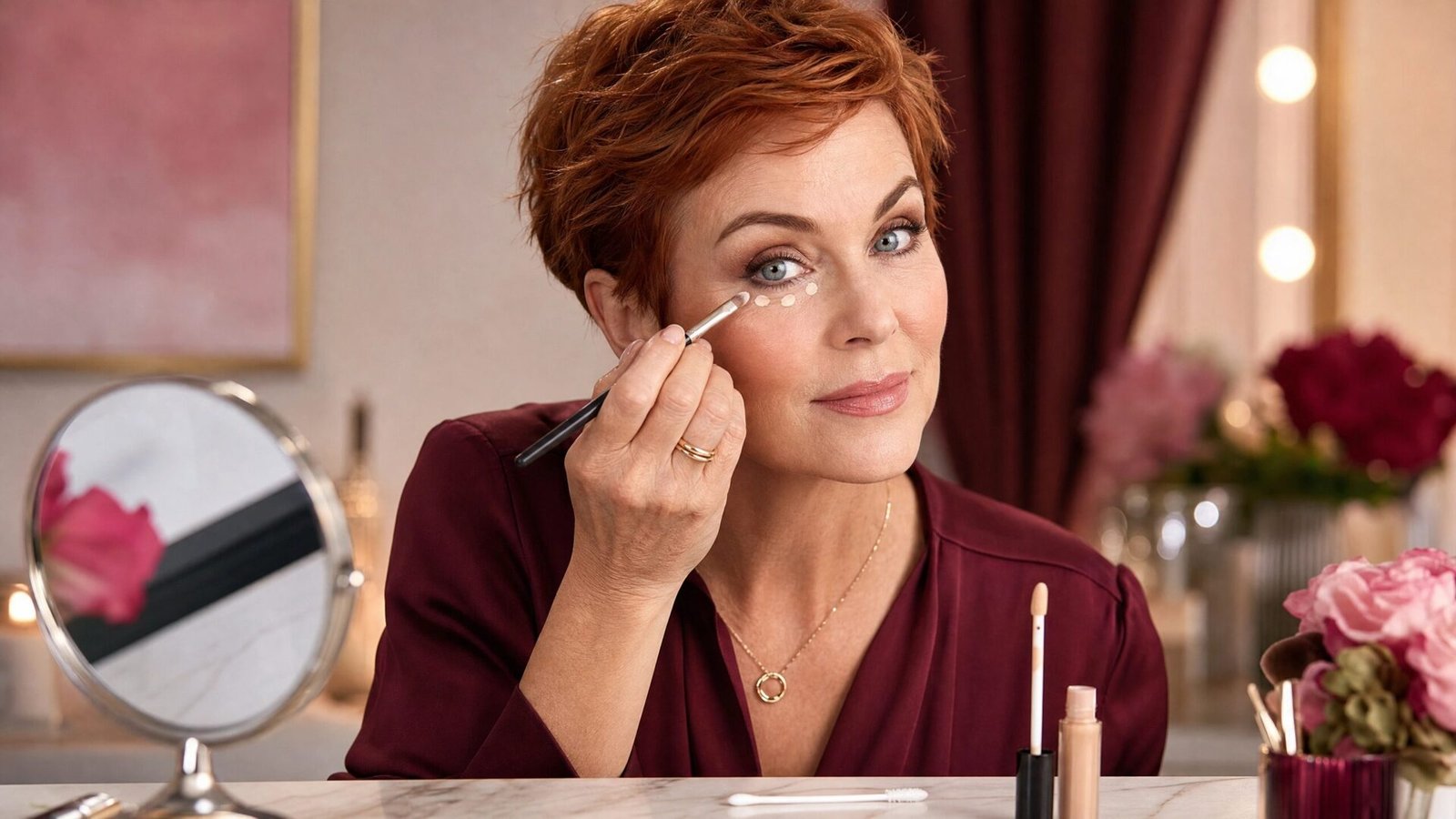
This one makes a meaningful difference, and once you try it you won't go back.Instead of swiping concealer directly under your eyes (which tends to settle into every fine line and crease before the day is even done), start by placing a small dot of concealer on the back of your hand to warm it up first. Then apply it strategically: a touch in the inner corner, a bit on the inner orbital area to bring that area forward if it looks hollow, and no higher than mid-under-eye. Staying away from the lash line is key because that's where there's the most movement and the most creasing.
A fluffy brush gives you a softer blend than a sponge in this area. The goal is a strategic placement, not a full application. Think of it as painting light where you need it rather than covering the whole area.
Mistake #5: Powdering Your Whole Face
The Move: Strategic Setting Only
Think of powder the way you'd think about salt in a recipe. The right amount in the right place is what makes everything work. Too much and you've dried out the whole dish.
You don't need to powder your full face. Focus on where you actually need it: the T-zone, any areas where you tend to touch your face or rest your phone, the labial folds around the nose and mouth, anywhere you know you're going to crease.
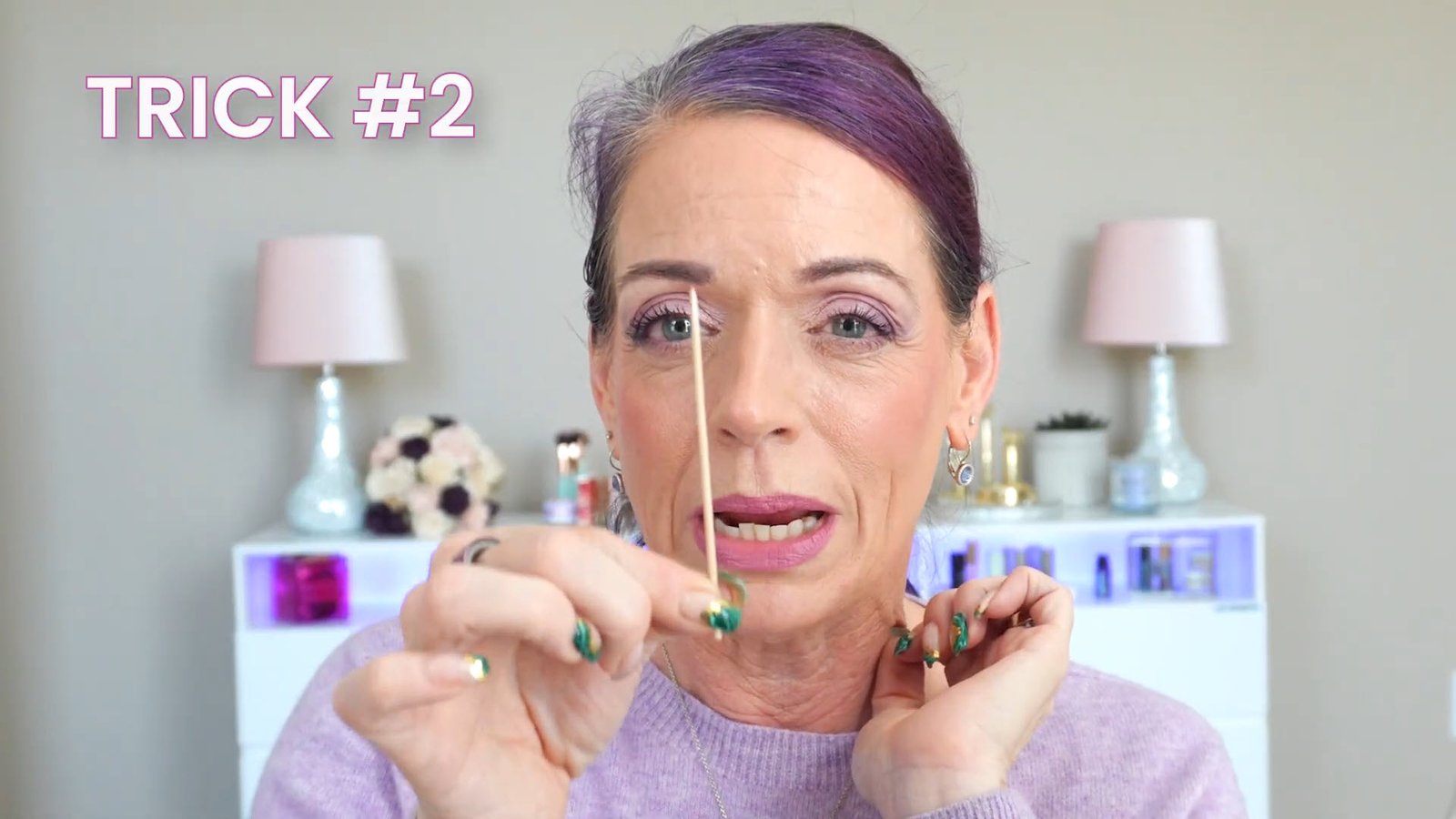
Here's my favorite trick for keeping concealer from settling: after you've applied it, smile naturally. You'll see immediately where it's starting to crease. Take a micro-detail Q-tip (the small pointed kind you can find on Amazon) and gently clear out the excess from those creases. Then just tap with your fingers to blend. After that, take a fluffy brush with a minimal amount of very finely milled powder, like the Laura Mercier Translucent Setting Powder, and place it precisely where you need it. Just the lines. Just the movement areas. That's it.
The Bottom Line on Menopause Makeup Mistakes
These menopause makeup mistakes are more common than you think, and none of the fixes are complicated. None of these moves are complicated. They're adjustments: to your prep, to your products, to your technique. Individually, each one makes a difference. Together, they change the way your makeup behaves on mature skin.
That said, every face is different. Different levels of dryness, different texture, different comfort levels with coverage. Personalization is where the real results happen.
If you want to shop the products I use and trust for menopausal skin, you can find everything over at my curated favorites page:
Shop My Favs: beautywithas.com/bwashopfavs/
And if you'd rather skip the trial and error and have someone look at your specific face and tell you exactly what to adjust, that's what my one-on-one lessons are for. You can book a session directly on the website.
Book a one-on-one lesson: beautywithas.com
And if you haven't already seen the full video, I walk through everything hands-on so you can watch the techniques in real time: